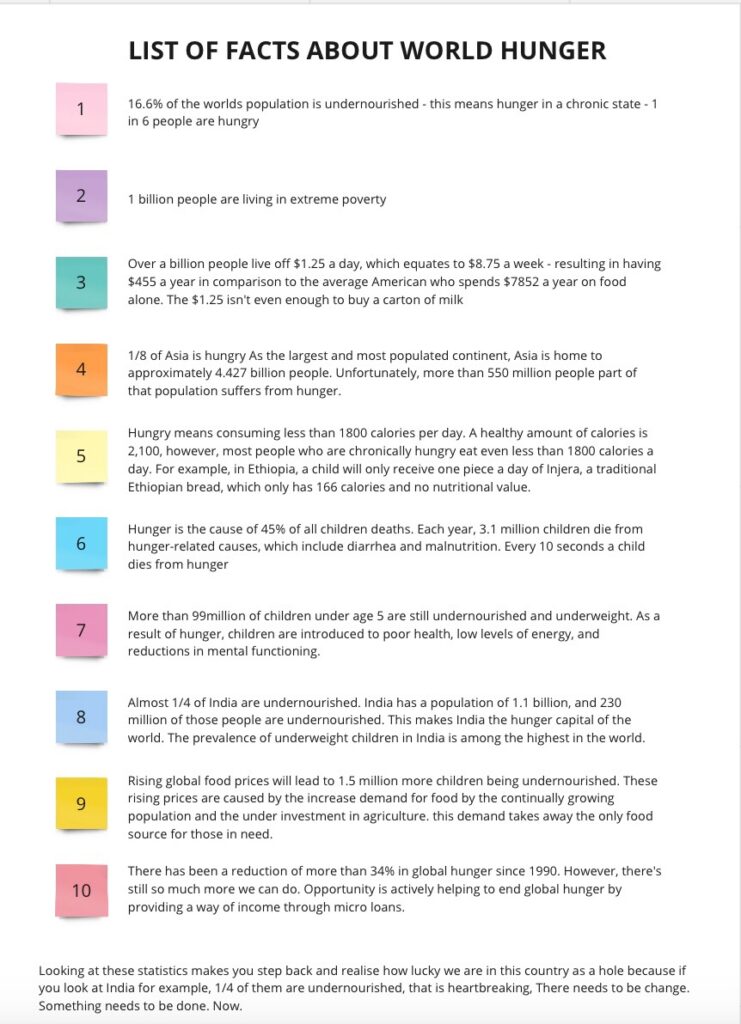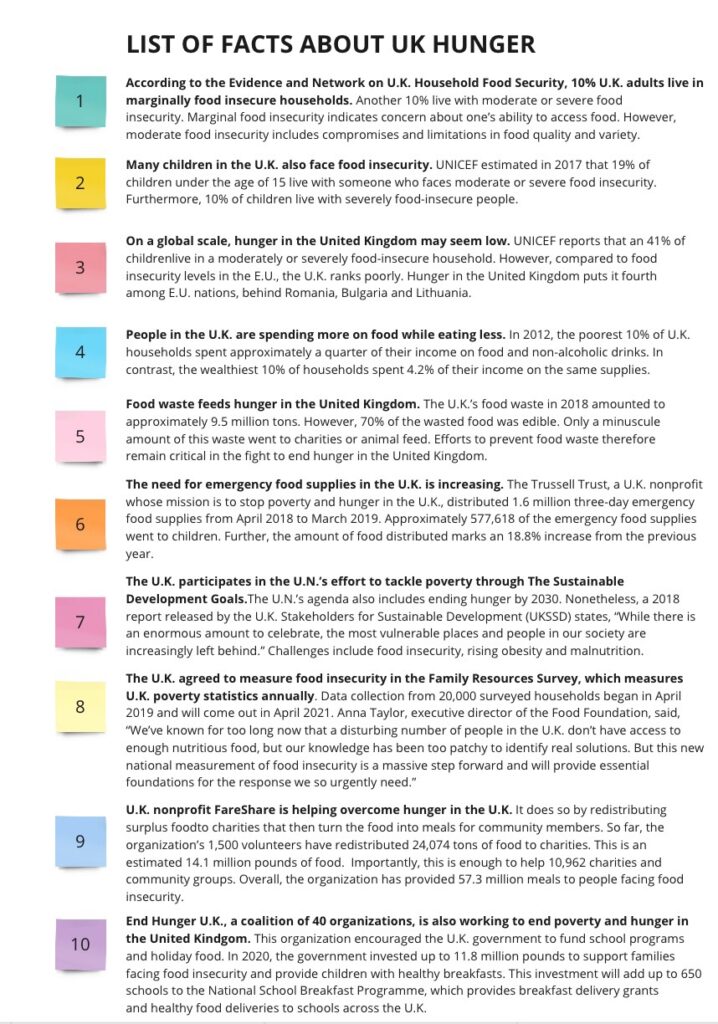
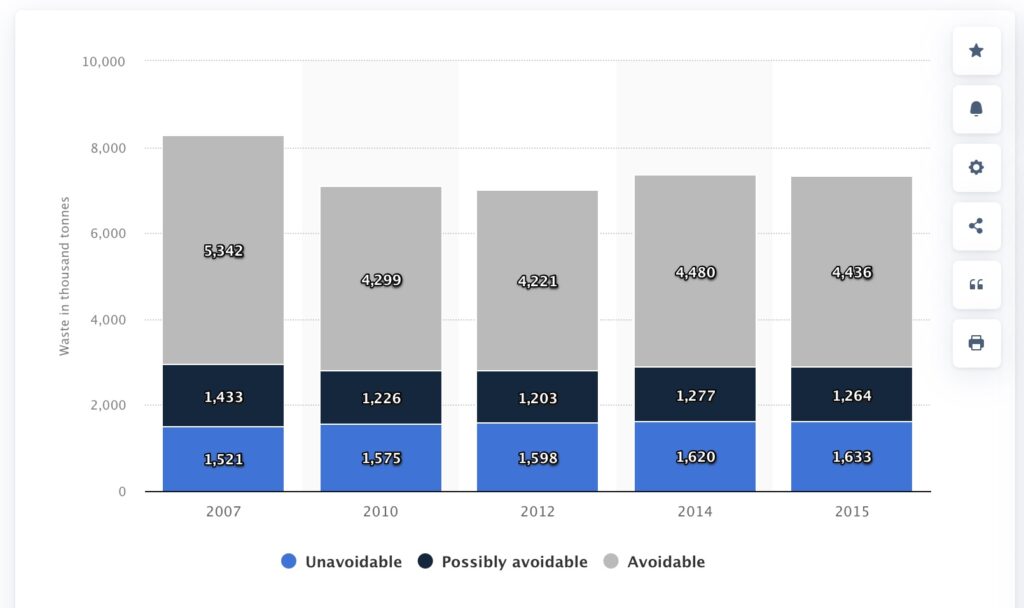
After initiating the project with idea generation, I opted to commence with statistical research, deeming it crucial in pinpointing a problem within the topic. I began by conducting simple searches on Statista, gaining insights and statistics released in 2017 about household waste categories from 2007 to 2015, distinguishing between unavoidable, possibly avoidable, and avoidable waste. This data emphasised the profound issue of food waste and its connection to poverty.
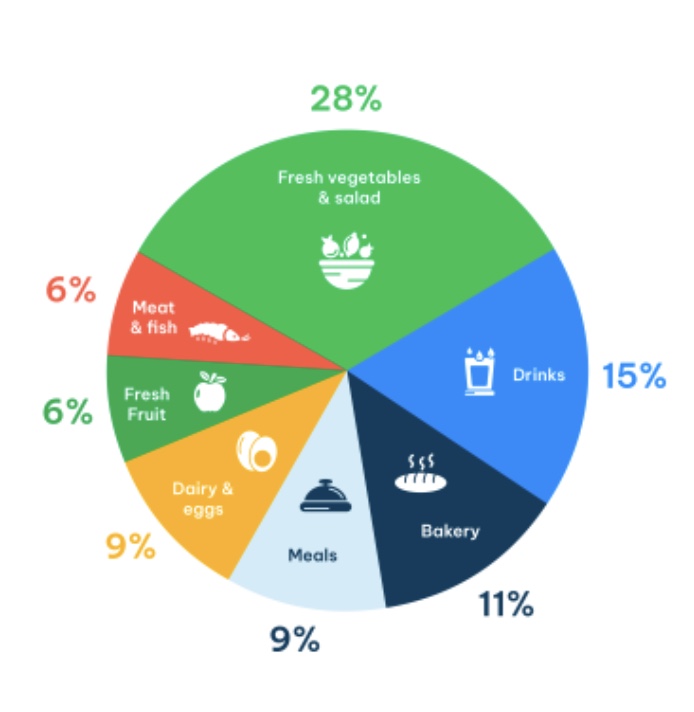
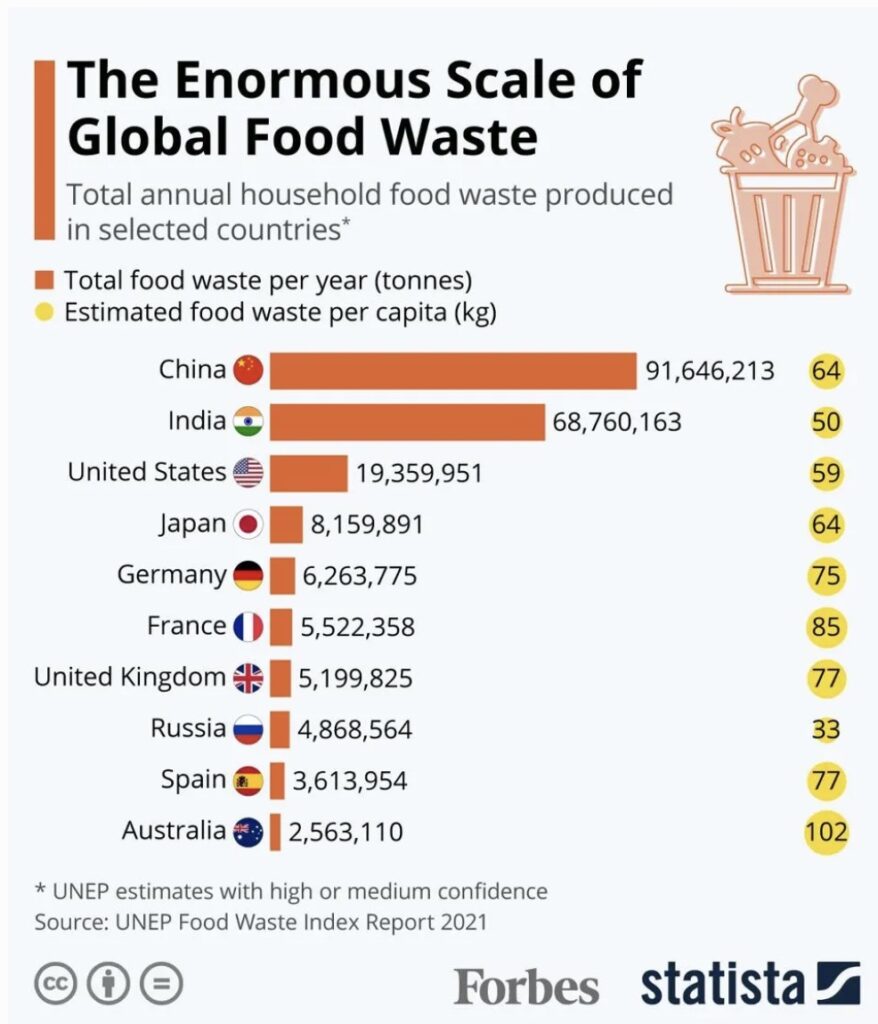
Expanding my research beyond Statista, I explored various sources to obtain valuable information. Notably, I discovered that 28% of food waste is attributed to fruits and vegetables. Examining global perspectives, I compared countries’ per capita food waste, with the UK standing at 77kg, surpassing the US at 59kg, challenging preconceptions and emphasising the need for targeted solutions.
Analysing the carbon footprint associated with different types of wasted food, I realised the disproportionate impact of wasting meat due to its resource-intensive production. This underscored the urgency of addressing food waste to mitigate environmental consequences.
Further research into specific UK regions revealed varying habits in repurposing food, with Liverpool less inventive than Scottish households. Exploring the top 10 reasons for food waste, a pivotal moment occurred when I identified a prevalent issue: people failing to adjust recipes for the number of servings, resulting in unnecessary waste.
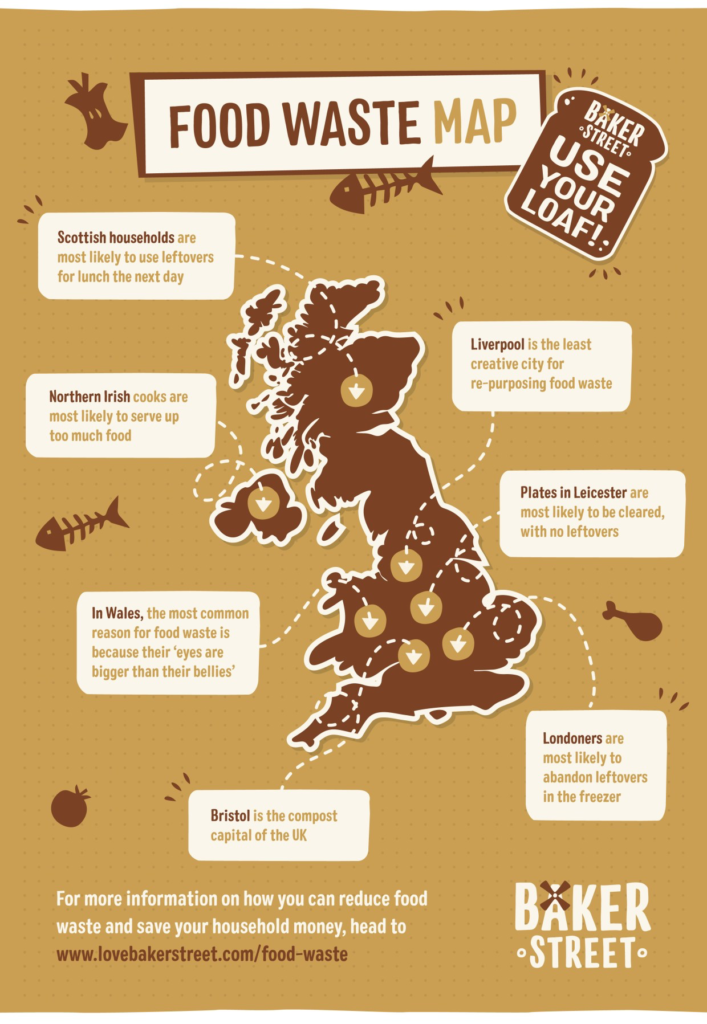
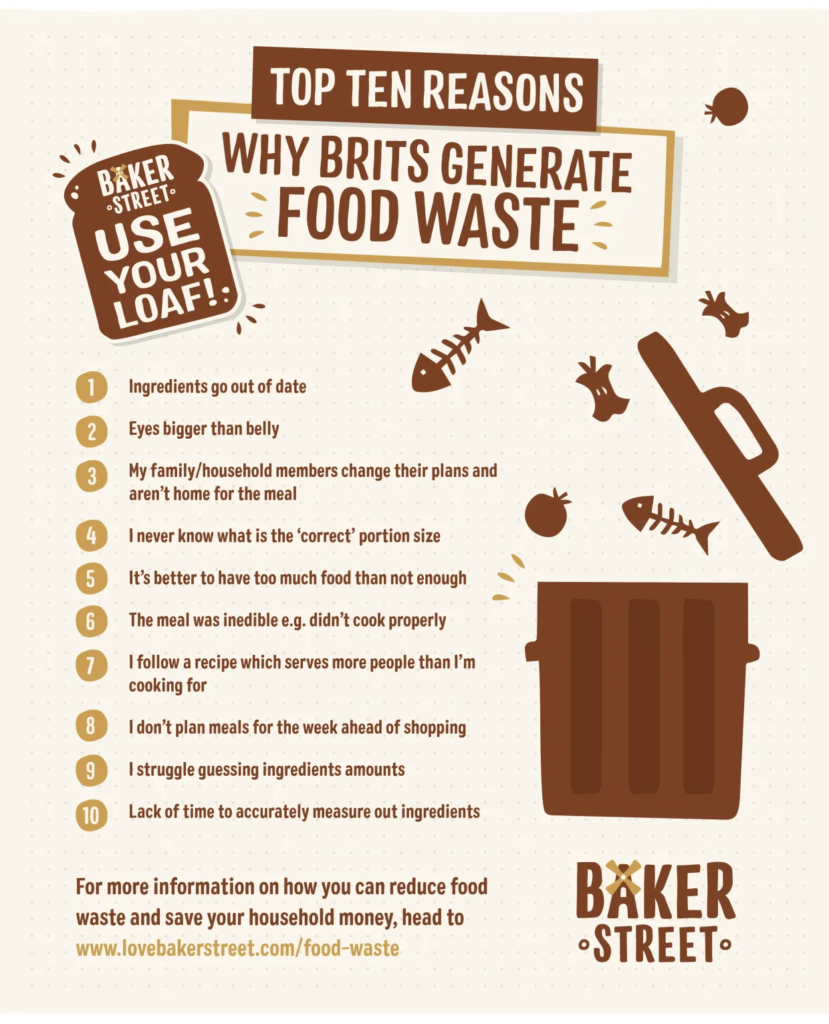
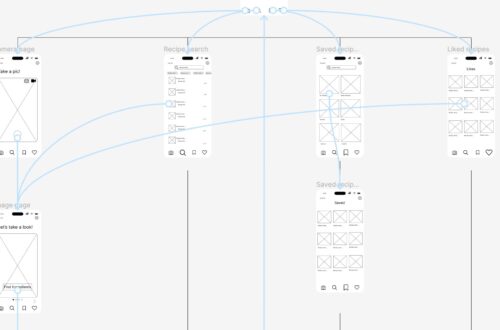
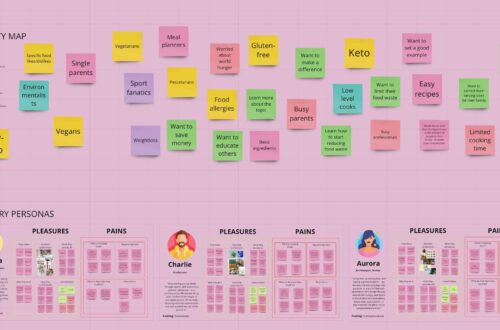
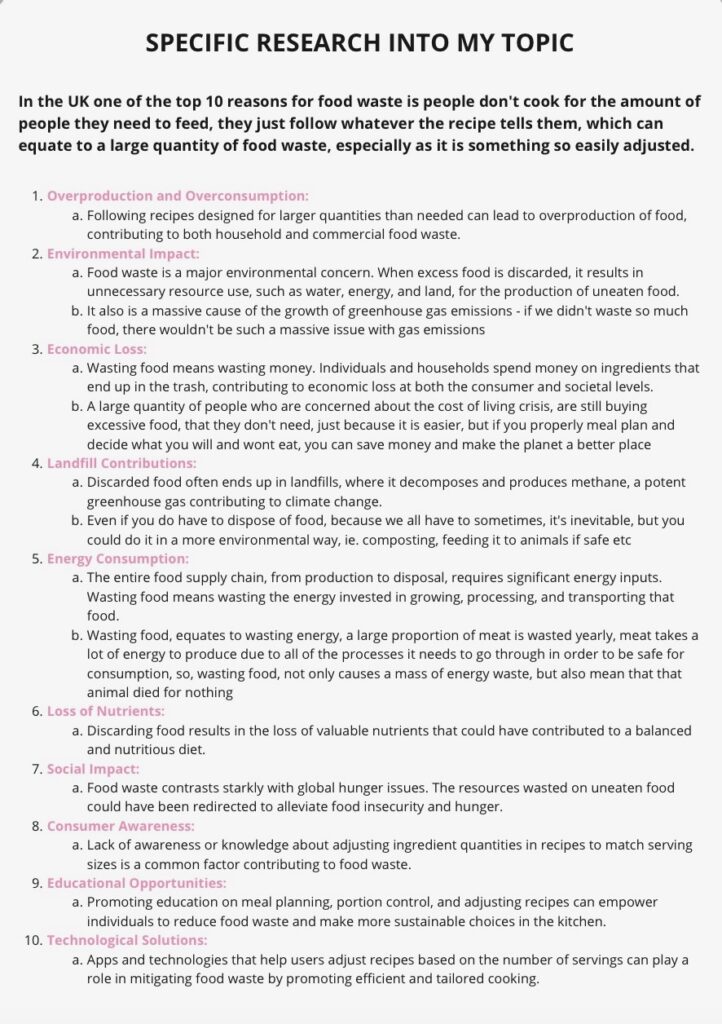
Shifting focus from a food donation reward scheme, I decided to tackle this problem by making my project developing a recipe adjustment app, whereby you can change the serving sizes, ingredients etc. I looked further into this idea and did some research into why it is such an important issue to raise and such an easy thing to improve on in your day to day lives. In exploring the repercussions of not adjusting recipes, I identified environmental, economic, and social impacts. Food waste contributes to increased greenhouse gas emissions, economic losses, and exacerbates global hunger issues. This comprehensive research provided a solid foundation for developing a meaningful and impactful solution to address food waste in the UK.
To deepen my understanding on food waste in general, I investigated supermarkets’ approaches to surplus food. Surprisingly, major retailers like Waitrose and M&S donated only a small percentage of their surplus to charity, highlighting an opportunity for improvement in addressing food insecurity.
Beyond the UK, I delved into global hunger facts, discovering that 1 billion people worldwide suffer from hunger. Narrowing my search to the UK, I uncovered concerning statistics, including 41% of children living in moderately or severely food-insecure households.