
My part of the User Interviews was to carry out research from information I analysed from the interviews. This job was originally for both me and Hashry, but unfortunately we waited to long for all the interviews and so we had to move on with designs and other parts of generative research. Once we got the interviews Hashry was busy prototyping and creating motions/ animations for our final outcomes and so this is were Sihina and myself carried on with research in our spare time whilst making the redesign part of our project a priority.
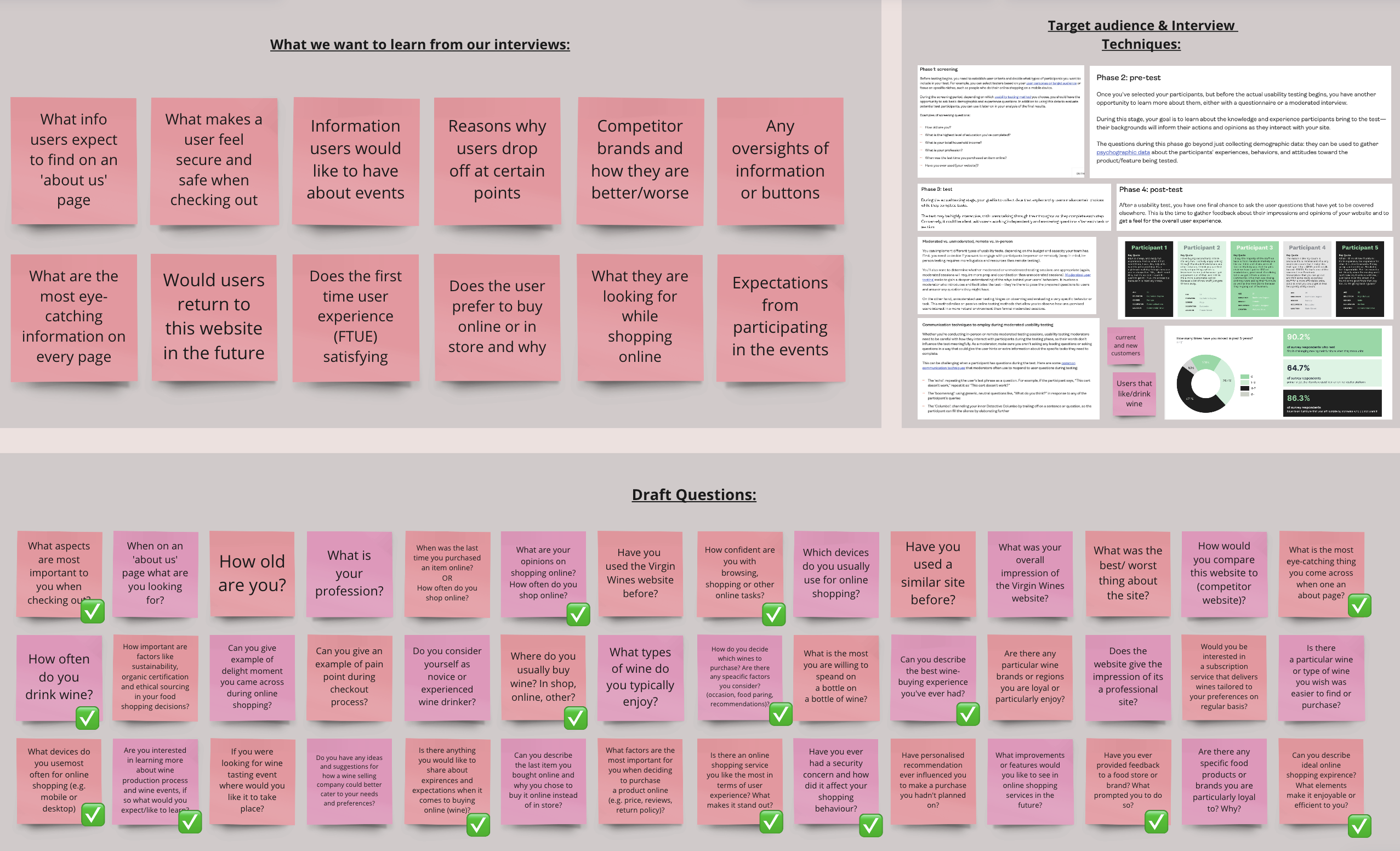
Above demonstrates the initial process in completing user interviews where myself, Hashry and Rob produced post- it notes for aspects we wanted to learn from the interviews, as well as innumerable draft questions. This too make sure we covered all parts and worded our questions efficiently to get detailed responses from our users.
Evaluating User Interviews
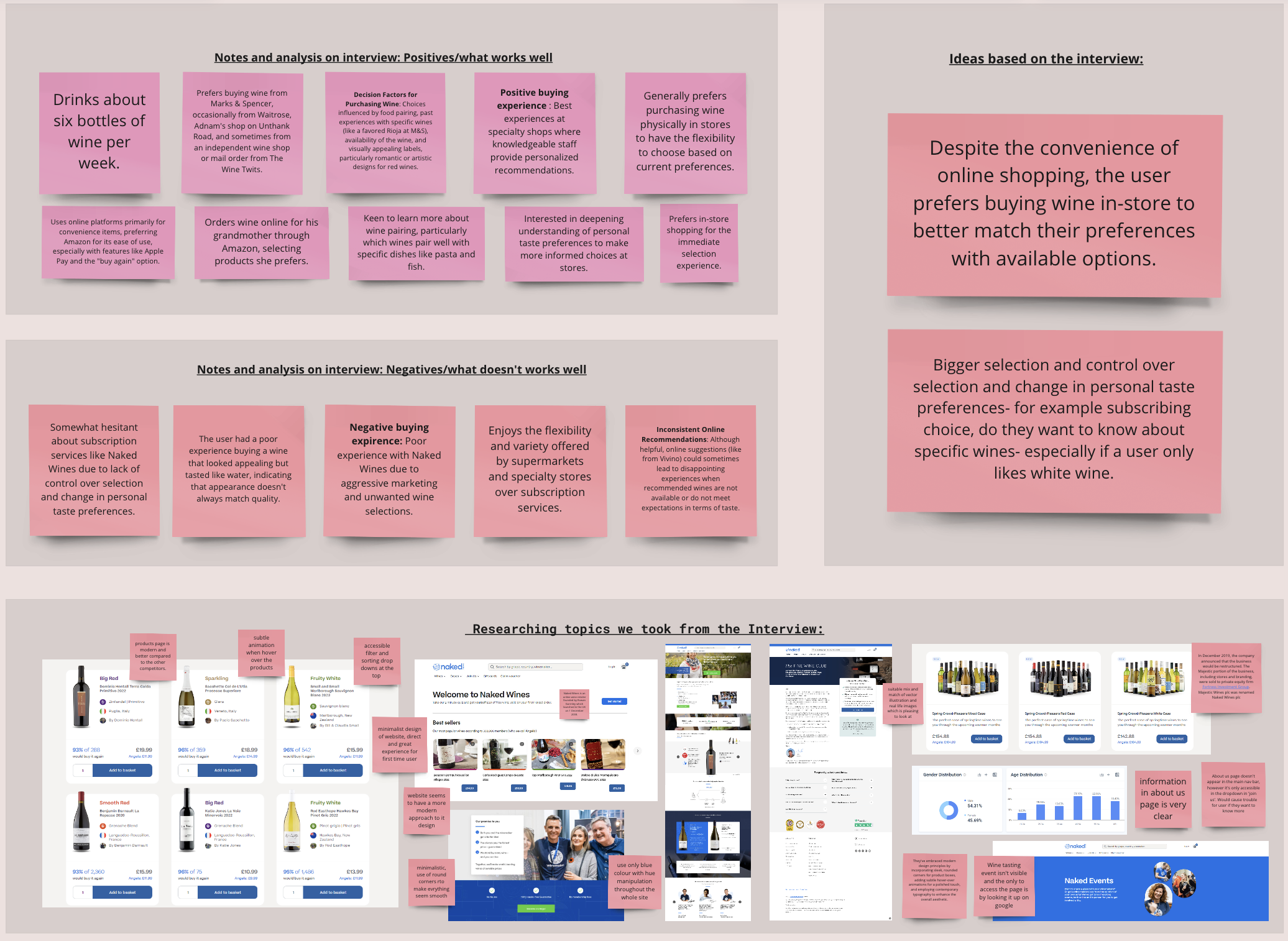
In this section of the research board Robert carried out 3 extensive user interviews and Dom completed 4 interviews. From this the interviewers added key points that represented positive or negative attributions. Once the interviews were completed me and Sihina were able to carry of further research by outlining what does and doesn’t;t work well according to the participant. From this we formed sections per interview that highlighted a specific topic mentioned in the interview which was different to others. We then researched this topic and including images and post it notes, completed heuristic markups as well as added any additional notes.
Once this was completed we produced ideas that could influence design choices based on each interview in order to improve the accessibility of our outcomes.
Affinity Maps & Outcomes
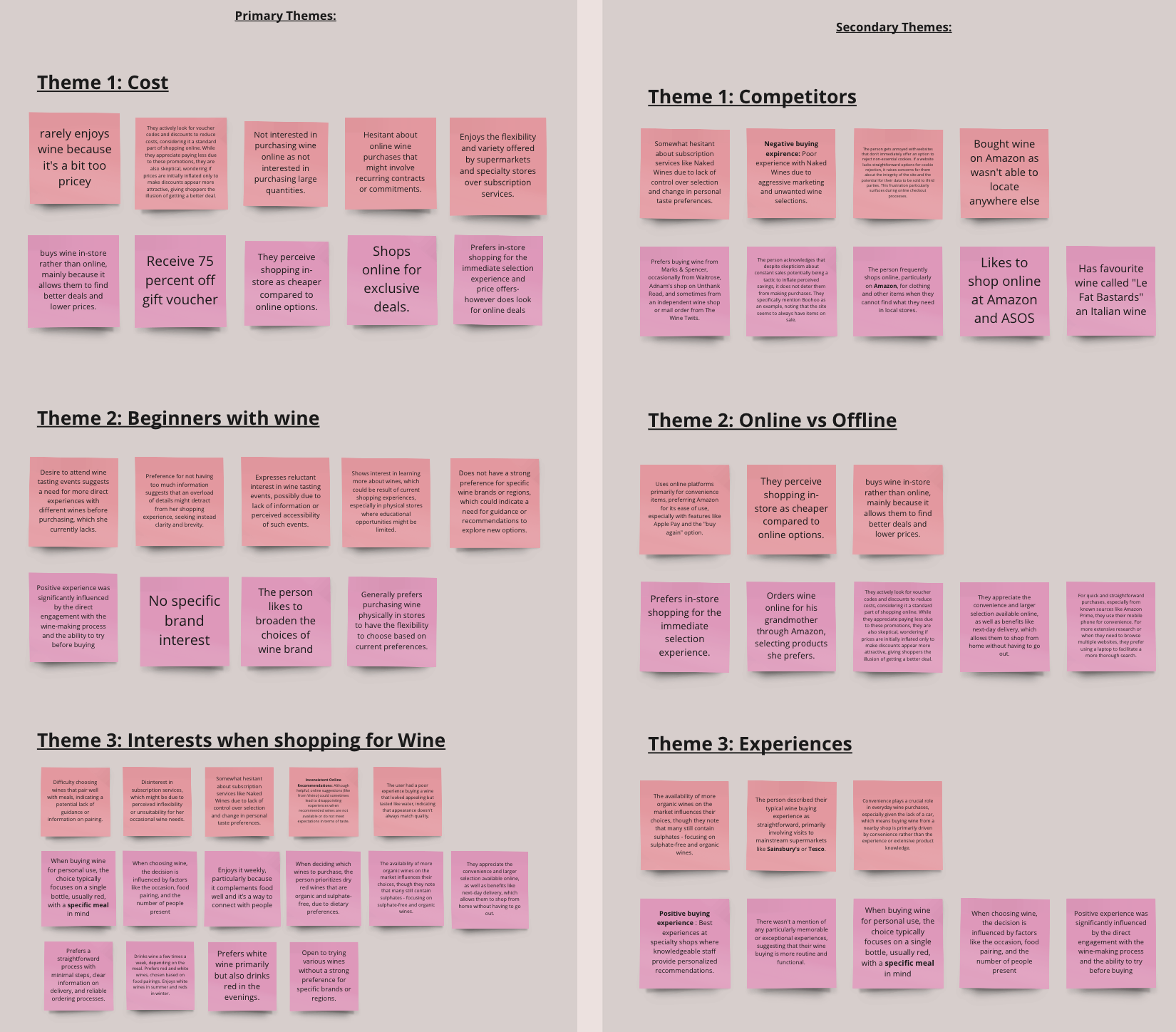
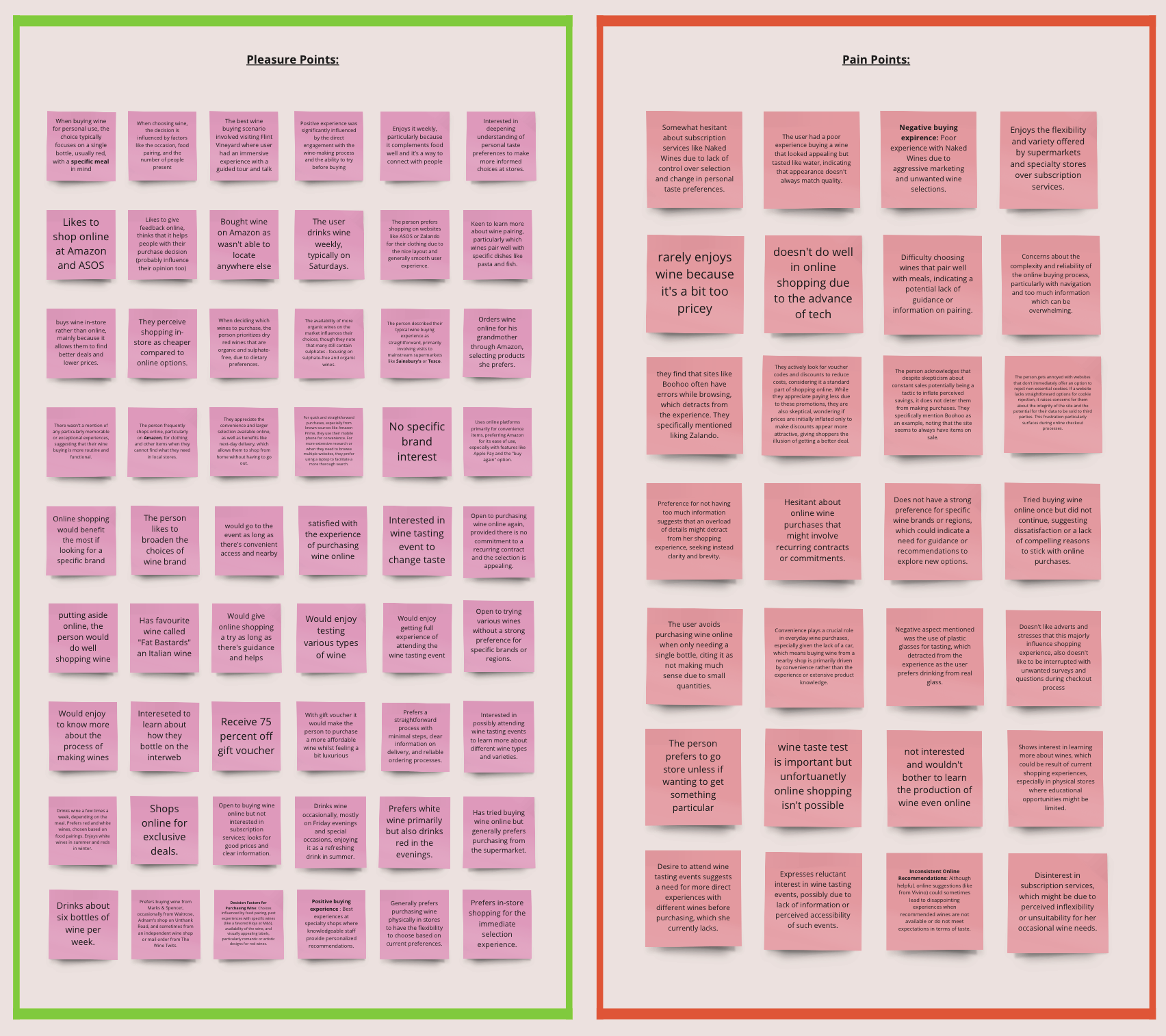
From the interviews Sihina and myself discussed various primary and secondary themes as we analysed the interviews as well as notes and research we carried out. The user interviews revealed that the primary reasons for reluctance to purchase wine online are location preferences and a belief that standalone stores offer cheaper products. Typically, these users are single and prefer individual purchases over bulk buying. Despite being comfortable with online shopping, they are hesitant to share card details but are open to using express payment methods like PayPal and Apple Pay.
From the interviews we found that users frequently shop on platforms like Amazon for cost-effective items and essentials such as clothing from ASOS and Boohoo. While they appreciate Amazon’s extensive selection of alcoholic beverages, they often miss out on live events and wine tastings due to busy schedules and shopping habits.
No Comments