

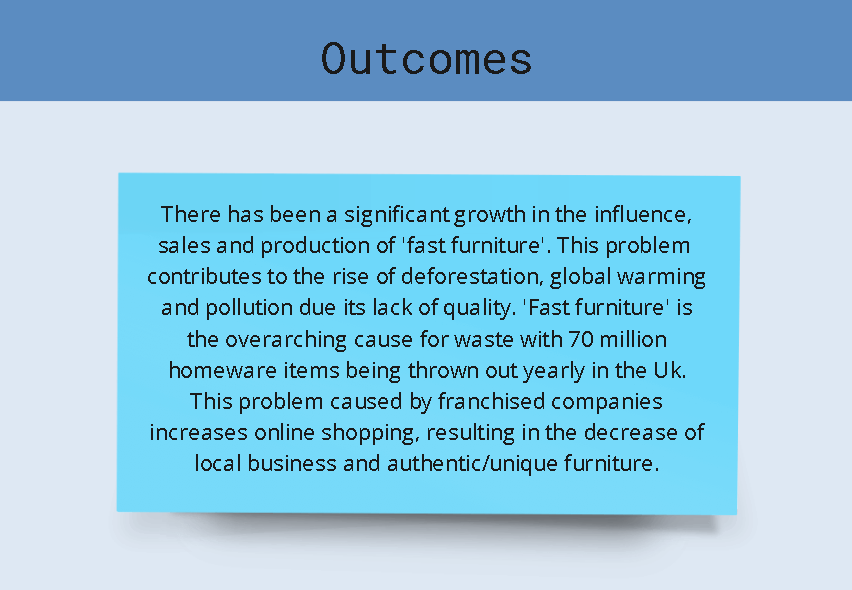
To create problems statements for this project I started with researching 15 global environmental sustainability issues using Earth.org. This website contained links to articles where I to further my research with particular topics. I enjoyed my initial research and learnt facts and statistics on various topics. This allowed me to broaden my choices and knowledge of environmentally sustainable issues global and how I can create an app for local, national and global audiences with an overall aim to design for the greater good. During my initial research I thought of app ideas for each topic which I found was very beneficial, because it ensured that I could continue and further research by already having an insight into app ideas for issues/topics. I believe that if I chose a topic first I would focus on the functionality of the app and more fixated on the numerable issues around my chosen topic, instead of picking a more precise area and producing a creative, fun, influential app which may be unheard of.
After exploring the various topics I narrowed down my research to my top 2 topics, including ‘Biodiversity’ and ‘Waste’ (focusing on furniture and materials). From this I developed my understanding of these topics even further by carrying out domain research on both sustainable issues, helping me explore other resources. After completing this I produced 6 initial problem statements for both ‘Biodiversity’ and ‘Waste’ which allowed me to summarise both topics before choosing to continue my project with the issue of ‘Waste’. From this decision I finally chose a suitable problem statement for this issue that reflects my app idea.
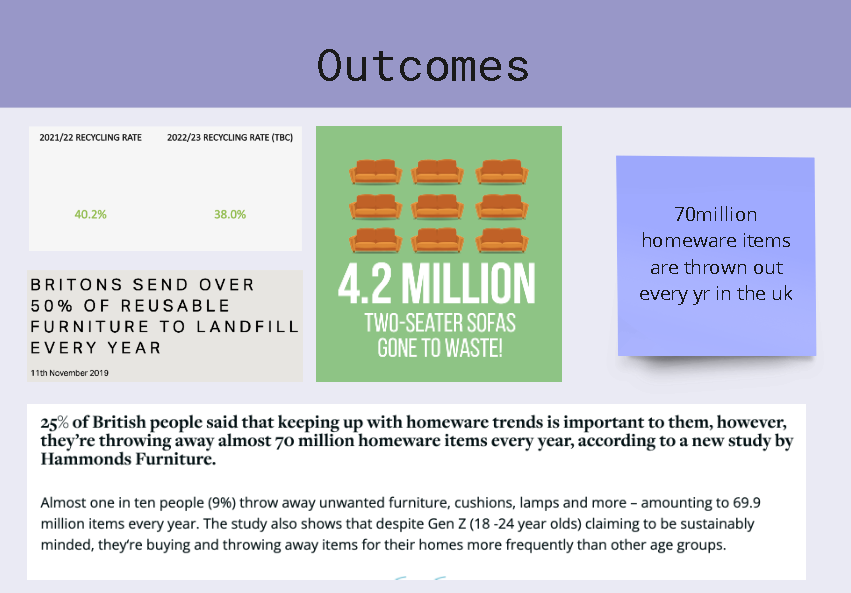
Here I researched various statistics based around my chosen sustainable issue of ‘Waste’, focusing on furniture. I carried out this statistical researching by using websites such as Statista, RightGreen, Norwich City Council, Circular, etc. I found that Statista was very useful to establish visual examples of statistics through the use of bar graphs.However this was limited due to the need for a premium account to explore full graphs and more topics on this area.
During my statistic research I came across more information for national statistics rather then globally or locally. These statistics fascinated me as I could look at our nationally problem within the Uk. One stastic stood out for me in particular, this was that ’70 million homeware items every year’ are being ‘thrown out’, I found this figure staggering and used it within my problem statement due to the nature of this eye-opening statement capturing the audiences attention.
However, as a whole I found it difficult to find local statistics of furniture waste for cities within England. Because of this, I believe that local resources need to educate and share more information on the growing sustainable issue as the difficulty of finding basic sustainability information was appalling, especially with council websites.
Using industry-standard ethnographic interviewing techniques, I planned, executed, recorded 10 user interviews carried out by myself.
Firstly I began by writing out some initial questions for the interviews around my problem matter of the ‘waste’, focusing on the sustainability. I also wanted some questions to mirror features of my apps and see how the public would respond and so I further made some questions around opinions on second-hand furniture and the idea of diy. From this work I created a final script, including my final ten questions which I would follow for all ten interviews.
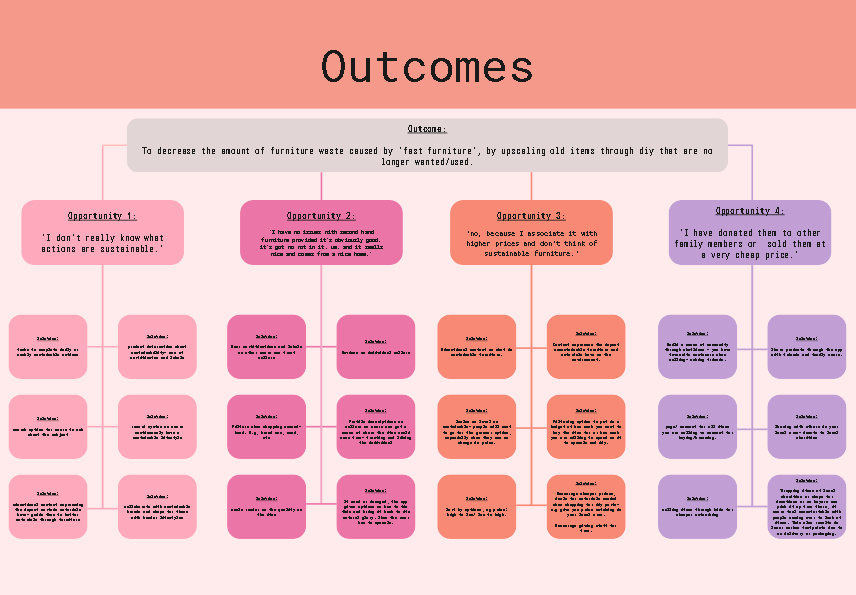
After completing my user interviews I created 3 affinity maps by putting my notes and analysis of the interviews into different categories. From this I found that no users do anything towards sustainability with most being uneducated on the matter. Because of this I produced an opportunity tree where I looked at 4 mains points gathered from my interviews before created 6 solutions for each opportunity point.
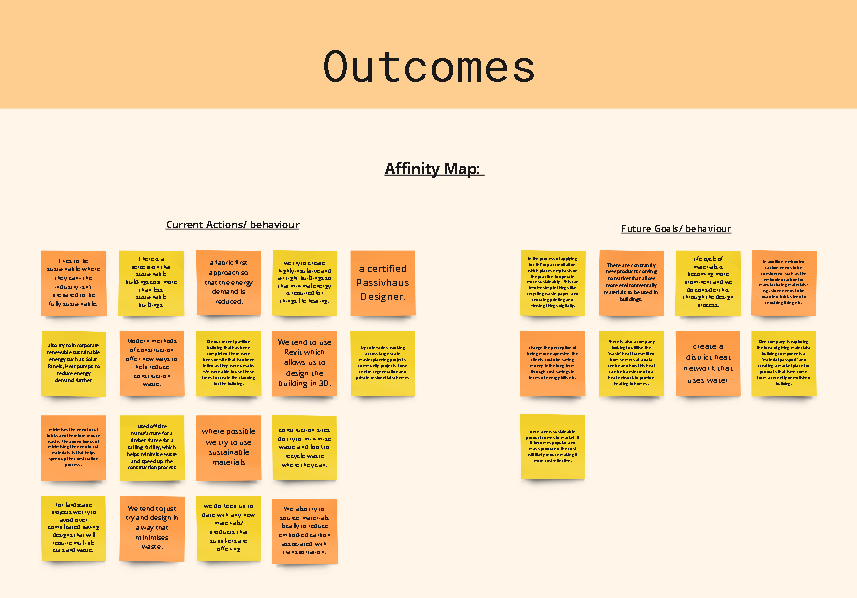
Here I carried out my expert interview with Andrew Walker, an Associate Director at Lavigne Lonsdale, Cornwall. By interviewing an Andrew, I got an understanding into the design process of producing successful architecture, landscaping and master plans and how they design solutions to complex built environment projects in a creative, practical and responsive way.
From this interview, I got an insight into the actions companies already take in being sustainable, as well as the ideas and development of new techniques and materials being made currently for a more sustainable future, by reducing wasted materials and emissions and energy. One which fascinated me was one company is exploring the idea of giving materials/ building components a ‘material passport’ and creating a market place for products that have come from a recently demolished building. This item can then be added to the market place, where designers can see it’s availability, resulting in the designer sourcing this beam rather than buying a brand new one.
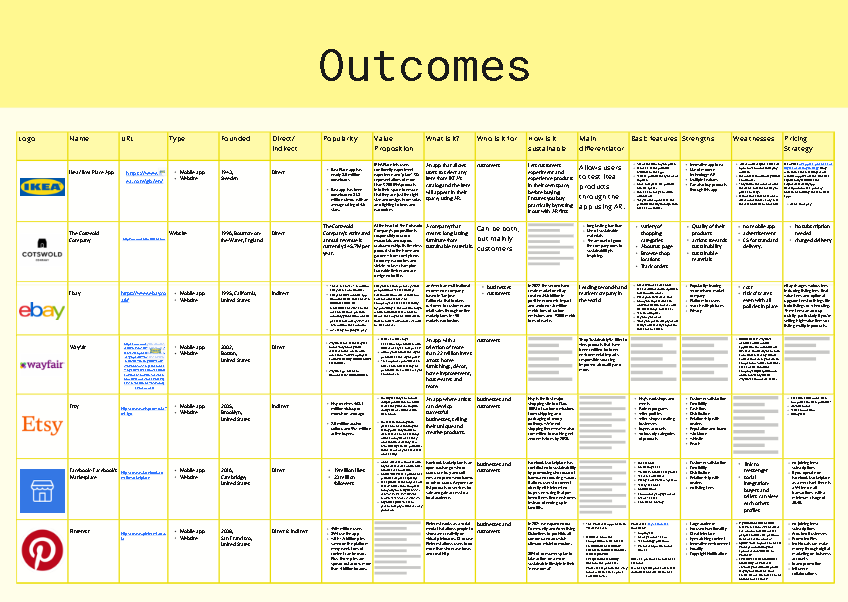
Producing a structured competitor review, I researched into 7 app/ websites competitors, focusing on which main differentiators create a positive experience for the user. Even though these competitors represent a mixture of direct and indirect, I found similarities when it came down to the basic features, reflecting on this, I realised my app must follow the same structure in order to achieve a positive user experience as a change in the simplest of features could confuse the user.
What I took from my competitor review is the various ways in which a brand or company can be in support of sustainability, through different solutions competitors make in order to tackle the problem space. I was inspired by The Cotswolds Company indepth actions towards sustainability as I was in awe of the progress and good they do for our environments. In particular, these movements resulted in better quality furniture, leading to long-lasting life spans. This is something I want to keep in mind when designing my app, because one of the main reasons as to why ‘fast furniture’ is being wasted, is due to poor quality from being made of unsustainable materials, therefore meaning a shorter life-span. As a result of this I aim to encourage long-lasting furniture whilst continuing the plea to use sustainable materials.
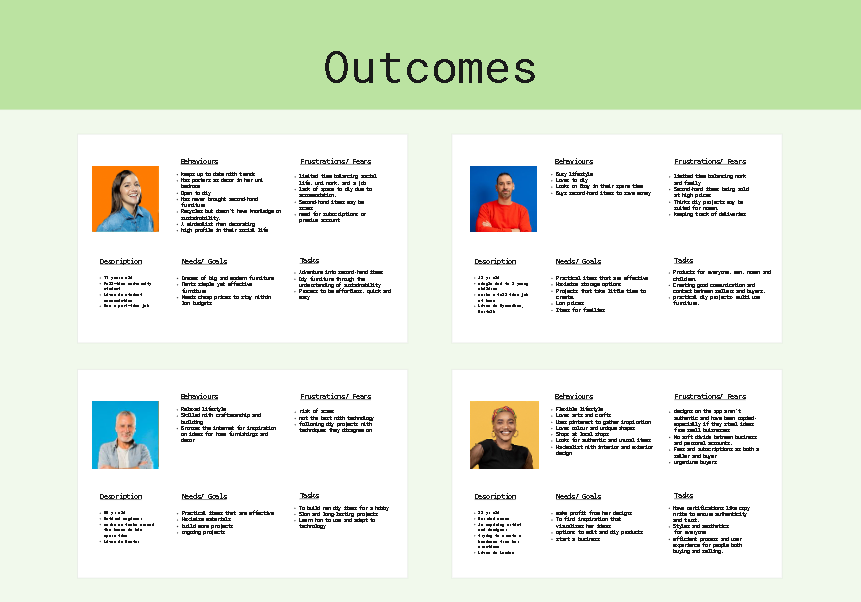
Through carrying out research on personas, I developed an understanding of frustrations and goals different users have when exposed to the idea of second-hand shopping and diy furniture for a more sustainable lifestyle.
Reflecting on my primary user, persona 4 I highlighted the frustrations for users who are intending to both shop as buyers and sellers, as apps either make separate accounts or blur the difference when illustrating shared accounts. In response to this I want to create one big account with separate chat systems and settings when managing buyer and seller profiles. On the other hand I also want users to experience the idea of browsing or catalogues where users save ideas and create boards like pinterest- this way the app can be served for inspiration too.
Once completing my personas, I produced a behavioural map where I evaluated where personas would sit on multiple scales based on my problem area. From this, I found that the common trend was the need to educate younger generations on how they can improve their lifestyles by being more sustainable. The solution to this is more educational content on the matter as well as encouraging second-hand buying and re-using furniture through diy to ensure it isn’t going to landfills for waste.
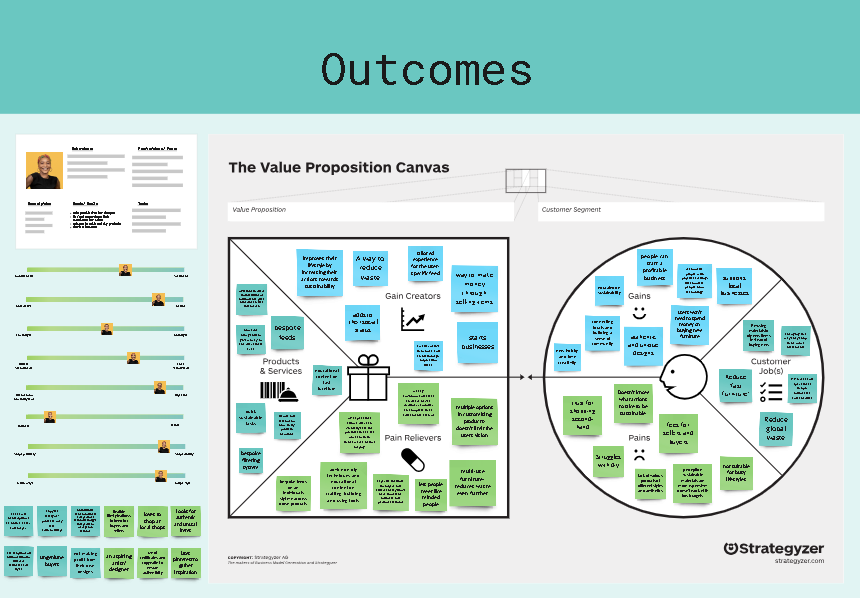
Here I completed my research on value proposition canvas’ where I investigated my primary and secondary personas. From carrying out my value proposition canvas on my primary persona, I understood the gains pains and jobs of a customer as well as analysing the gain creators, pain relievers and products & services my app will illustrate. This put into perspective what the specific requirements for users are as well as what solutions my app would demonstrate to resolve user pains.
Furthermore; I wanted to explore value proposition canvas further to see how my app could adapt to different users and what they gain as a customer. This also elevates where users may struggle compared to others. For instance, my secondary persona struggles with diy and hasn’t done it yet, therefore unlike my primary persona, this user will need; ‘advice on diy techniques and educational content on crafting, building and using tools’.


No Comments